ع



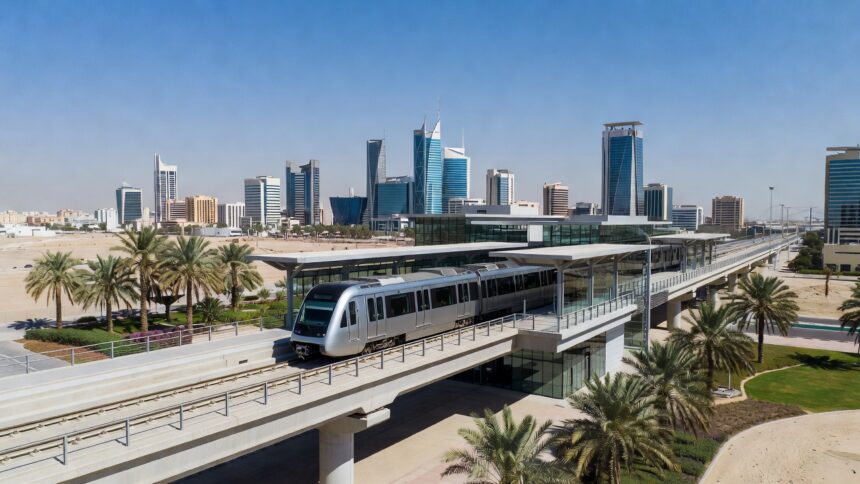
The Royal Commission for Riyadh City reported that the capital’s newly built public transit network has recorded strong usage since services began expanding in 2023. Its automated metro system, spanning 176 kilometers with six lines and 86 stations, carried 162 million passengers in the first 12 months after opening in December 2024. The commission’s data further shows that accompanying bus routes have transported more than 100 million riders over a similar period. This adoption rate underscores a deliberate policy shift toward reducing private vehicle dependence in one of the region’s most sprawling metropolitan areas.
NEOM’s official project description positions The Line as a 170-kilometer cognitive city engineered without conventional roads or personal cars. The development will rely on integrated high-speed transit and pedestrian corridors within a structure 200 meters wide and 500 meters tall, according to NEOM. Plans call for the city to eventually support nine million residents on a compact 34-square-kilometer footprint while running entirely on renewable energy and preserving 95 percent of the land for nature. Such specifications illustrate how Saudi planners have elevated mobility as a foundational design principle rather than an add-on feature.
The Public Investment Fund has driven several giga-projects that incorporate similar sustainable transport thinking, including the Diriyah development northwest of Riyadh. Diriyah Company, operating under the fund, is creating the City of Earth across 14 square kilometers centered on the UNESCO-listed At-Turaif district with traditional Najdi architectural elements. The $63-billion initiative will deliver homes for over 100,000 people alongside hotels, museums, an opera house and extensive retail and leisure facilities. Project timelines target completion of major components by 2030, aligning with broader national objectives for heritage-informed urban growth.
A nation moving forward, a city designed to move has become a guiding theme in Saudi urban policy documents and announcements. The Ministry of Transport has coordinated nationwide efforts to link new metro, bus and high-speed rail systems with emerging economic zones and residential communities. International partners including French firms RATP, Alstom and Systra supplied technical expertise for Riyadh’s metro, which Guinness World Records recognizes as the largest automated network. These collaborations have accelerated the deployment of world-class infrastructure tailored to local conditions and future demand.
Industry assessments from Mordor Intelligence project continued expansion in related sectors such as cold-chain logistics and specialized warehousing that support the enhanced mobility networks. The Royal Commission for Riyadh City has emphasized that the transit investments aim to ease chronic congestion while improving air quality and resident wellbeing. Additional phases will introduce further electric mobility options and seamless intermodal connections across the kingdom’s major cities. Planners continue to refine designs based on early operational data from the initial lines and routes.
NEOM representatives have stated that The Line’s vertical layering of services and transport will deliver efficiencies impossible in traditional horizontal cities. Diriyah planners, meanwhile, have focused on shaded pedestrian streets and integrated public spaces that encourage walking and reduce reliance on motorized transport within the heritage core. Both projects form part of Vision 2030’s push to diversify the economy through improved connectivity and quality-of-life enhancements. Ongoing construction progress suggests these mobility-focused developments will remain central to Saudi Arabia’s urban strategy in the years ahead.