ع



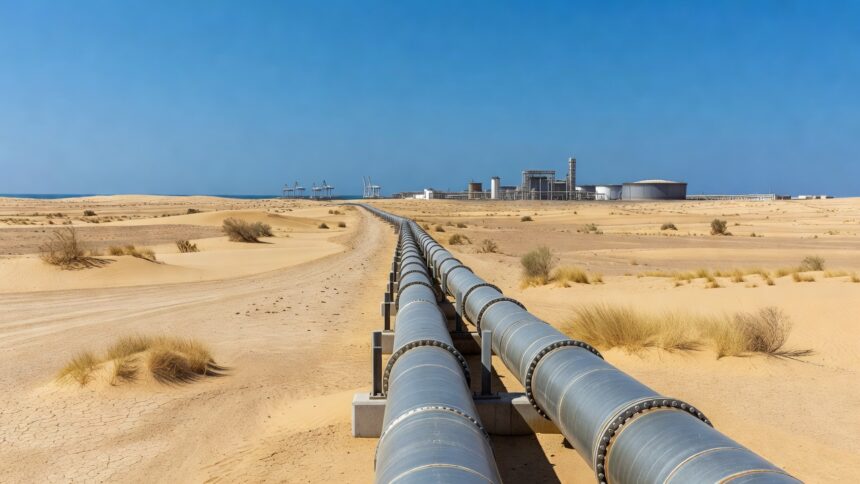
The resumption allows crude exports from the Red Sea terminal to restart later in the day while the pipeline initially operates at a reduced rate, according to the news agency. Saudi Aramco is working toward restoring flows to around 4 million barrels per day, equivalent to 4 percent of global supply, two of the sources told Reuters. A security source briefed on the matter estimated that full capacity could take weeks to achieve as repairs continue on damaged sections.
Drone strikes on September 13 forced the immediate shutdown of the 1,200-kilometre pipeline that had been rerouting oil away from the disrupted Strait of Hormuz following the US-Israeli war on Iran, Reuters reported. The route had been transporting roughly 4 million barrels daily to Yanbu since tanker traffic through the strait was curtailed. One cargo bound for China was scheduled to load at the port Tuesday as supply to Aramco refineries on the Red Sea coast also resumes.
Traders responded by moving vessels to Egypt’s Mediterranean Port Said for ship-to-ship transfers and to Sidi Kerir in preparation for renewed Saudi loadings, two additional trading sources told the agency. The restart contributed to selling pressure on global oil markets where Brent crude futures fell more than 2 dollars a barrel to their lowest level since September 8. Saudi Aramco did not immediately reply to requests for comment on the operational details.
The East-West Pipeline system links eastern production fields to western export facilities and holds a nominal capacity of 7 million barrels per day, according to industry assessments. Its strategic value has increased markedly during the regional conflict as the kingdom’s primary alternative to Gulf export routes. In a parallel incident in April, strikes reduced pipeline throughput by about 700,000 barrels per day yet the Energy Ministry announced full restoration to 7 million barrels within days, Reuters and Al Jazeera reported at the time.
Saudi crude production averaged 6 million barrels per day in August, the lowest level in more than three decades, the International Energy Agency data shows. That figure stands against an annual average of 9.4 million barrels daily the year before. The pipeline recovery is expected to bolster both local refinery supplies and commitments to international buyers amid ongoing market volatility.
Earlier ministry statements following the April attacks noted that affected energy sites across Riyadh, the Eastern Province and Yanbu had seen operations disrupted before rapid repairs restored capacity. The latest drone activity has been attributed to Iran-aligned militias operating from Iraq, according to prior assessments cited across regional coverage. Officials have yet to release a detailed damage evaluation from the September strikes.