ع



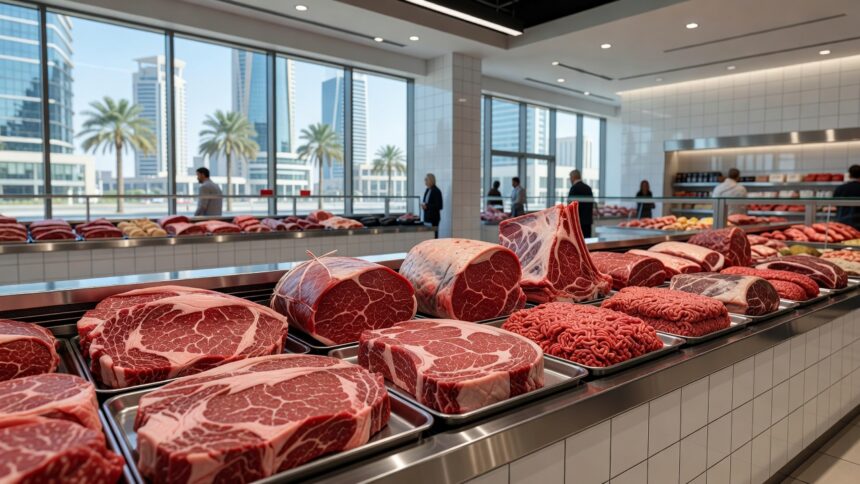
The US Meat Export Federation forecast on September 21 that sales of American beef in Saudi Arabia could reach $150 million annually now that technical barriers in place for more than a decade have been lifted. Exports to the kingdom doubled from a year ago in both volume and value since April when access was expanded according to US Department of Agriculture data covering the April through July period. The USMEF said shipments reached 575 metric tons valued at $6.2 million during those four months while the organization ramps up promotional activities to build on the momentum in one of the world’s fastest growing protein markets.
Saudi Arabia’s removal of the Export Verification program requirement that had restricted US beef since 2015 has significantly increased the share of American production eligible for the market the US Department of Agriculture Foreign Agricultural Service reported in March. The Saudi Food and Drug Authority also adjusted rules on bovine-derived tallow in animal feed including for ruminants which further eased supply chain constraints. USMEF president and chief executive officer Dan Halstrom stated that these steps make the market far more commercially viable for US exporters who previously held less than $10 million of a total import market that exceeds $1 billion.
Halstrom emphasized the demographic and economic factors driving demand in comments to industry outlets. He noted that Saudi Arabia has one of the youngest populations in the world with those under 30 forming a large segment that supports a booming foodservice sector including family-style dining and premium burgers. The USMEF leader added that the country has held promise for US beef for a long time but overly restrictive feed traceability and other requirements had limited participation until this year’s changes.
USMEF has responded with intensified efforts to reintroduce American beef including workshops and seminars conducted by its director of culinary programs Germán Navarette this summer. Participants in one-on-one sessions with importers expressed strong excitement about the availability of US product according to Navarette. The federation is planning accordingly for the $150 million opportunity with support from the US Department of Agriculture and the Beef Checkoff Program to educate buyers on the quality consistency and variety of US beef cuts.
Competition remains strong from established international suppliers in the Saudi market yet USMEF representatives highlight advantages in product diversity and reliability that align with growing demand for high-end protein. Halstrom pointed to the rapid expansion of the foodservice segment which he described as among the fastest growing globally for more than a decade. The organization continues to work with traders in the region to increase awareness and secure shelf space in retail and foodservice channels following the regulatory improvements.
Earlier projections from USMEF Middle East representative Rami Bousaleh had estimated an additional $100 million to $150 million in annual sales once the Export Verification program was eliminated. The actual early results through July have aligned with those expectations and prompted further investment in market development activities. Halstrom concluded that even after ten years many buyers retain familiarity with US beef while a new generation is eager to learn more about its applications in contemporary Saudi dining trends.