
 ع
ع


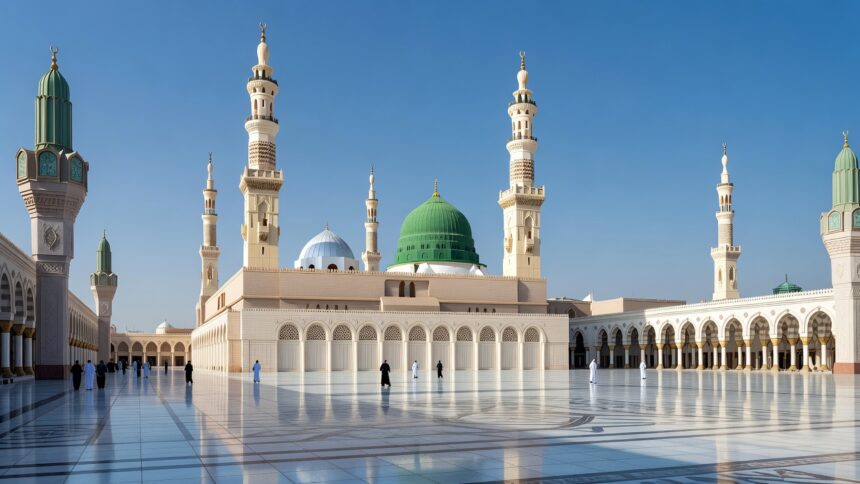
The General Authority for the Care of the Affairs of the Grand Mosque and the Prophet’s Mosque introduced a suite of online tools that let visitors map out their time at the Prophet’s Mosque before they arrive, drawing on live updates to ease navigation and reduce congestion at one of Islam’s holiest sites. These services, which include an interactive map and crowd-monitoring features, build on the authority’s push to integrate technology into daily operations at both the Grand Mosque in Makkah and the Prophet’s Mosque in Madinah. According to the authority, the platform improves the overall experience by delivering information directly to users’ devices, allowing them to adjust plans based on current conditions rather than discovering issues upon entry.
An interactive map forms the centerpiece of the new offerings, according to the authority, supplying up-to-date details on mosque facilities, service points and optimal routes that help pilgrims move efficiently through the sprawling complex. The authority added that users can pinpoint their location and identify nearby amenities, a capability that has grown increasingly important as visitor volumes continue to climb. Prayer-area occupancy data further supports decision-making by revealing real-time availability, enabling worshippers to select times and locations that align with their schedules.
The authority’s crowd-status service tracks congestion levels specifically along the route for offering salutations to the Prophet, while a dedicated visits portal and worshipper’s guide provide structured information for first-time and returning guests alike. Additional components encompass the Manarat Al-Haramain educational resource and a children’s hospitality center that families can locate in advance. These elements work together as a comprehensive pre-visit package that the authority said aligns with national digital transformation priorities aimed at serving millions of annual pilgrims.
Saudi Press Agency figures show the Prophet’s Mosque drew more than 14 million visitors during Ramadan 2025, a volume that underscores why pre-planning tools have become essential for maintaining smooth operations and high service standards. Comparable data from the authority for the full year reflect sustained high attendance that frequently exceeds 20 million for key prayer periods, prompting expanded reliance on technology to manage flows without compromising the spiritual atmosphere. Such statistics have driven parallel digital initiatives at the Grand Mosque, where real-time services have already demonstrated measurable improvements in crowd distribution.
The authority encouraged visitors to explore the full range of features through its official website, where the tools are now accessible in multiple languages to accommodate the international makeup of most pilgrim groups. This rollout follows earlier deployments of similar digital aids that the authority credited with enhancing both safety and convenience across the Two Holy Mosques. Officials noted that continued investment in these platforms supports broader goals of elevating the pilgrim experience while preserving the sanctity of the sites.
Further refinements to the system remain under review by the authority, which has integrated feedback from previous digital launches to refine user interfaces and expand data accuracy. The Prophet’s Mosque, expanded significantly in recent decades to handle growing demand, benefits particularly from these advances that allow precise management of peak periods around daily prayers and special occasions. With these services now live, the authority expects a noticeable reduction in on-site inquiries and improved overall satisfaction among the diverse crowds that converge on Madinah throughout the year.