
 ع
ع


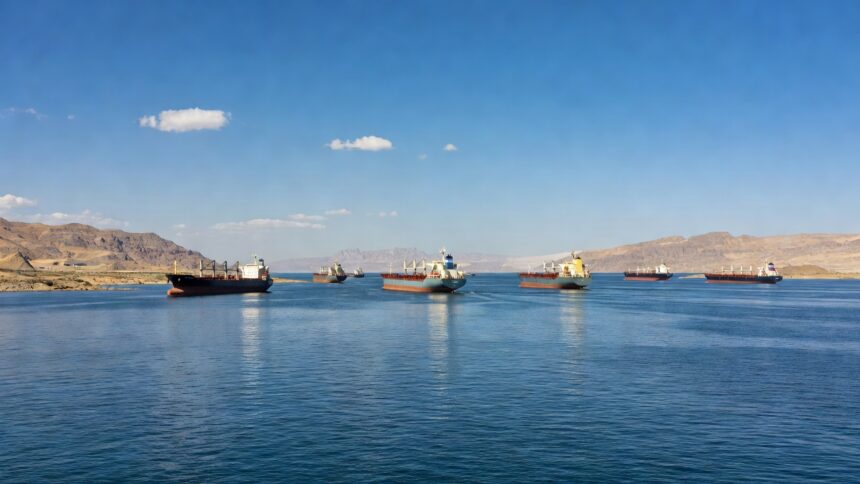
The Saudi Press Agency reported that the Council of Ministers, chaired by King Salman in Jeddah, reiterated the Kingdom’s categorical rejection of the repeated Iranian attacks on commercial vessels and tankers in its session on Tuesday. Ministers described the actions as a direct threat to the safety and security of maritime navigation while affirming that they constitute a grave violation of international laws and norms. The Cabinet further viewed the strikes as a blatant defiance of a Security Council resolution that obligates respect for the freedom of navigation through the Strait of Hormuz and condemns any obstructing threats or actions.
Minister of Media Salman Al-Dossary conveyed the Cabinet’s position in the statement to the Saudi Press Agency, underscoring Saudi Arabia’s consultations with friendly nations to strengthen bilateral and multilateral cooperation aimed at supporting regional and international security. The discussions have focused on achieving mutual interests amid heightened tensions, with the Kingdom emphasizing the need for collective responses to preserve stability. Such engagements come after a series of incidents throughout 2026 in which Iran-backed groups, including the Houthis in Yemen and militias in Iraq, targeted Saudi infrastructure and shipping according to multiple regional assessments.
The Cabinet welcomed the institutional and operational activation of the Saudi-led Multinational Maritime Defense Alliance after completion of its organizational frameworks, describing the move as a new phase of joint action. This alliance seeks full operational readiness to enhance collective maritime security, protect freedom of navigation across key straits and waterways, and ensure the continuity of international trade along with global supply chains. A recent analysis by the Soufan Center highlighted Saudi Arabia’s combination of alliance-building and diplomatic efforts to counter mounting threats from Iran and its regional proxies that have included attacks on energy facilities and shipping lanes.
Tensions have escalated in recent months with Iran-backed Houthis renewing operations against Saudi targets, including strikes on ports and vessels that shattered a prior truce, as Iran International reported in mid-August. The group defended its actions as responses to alleged Saudi pressures on Yemen, while Saudi officials have repeatedly held Iran responsible for the consequences of such aggression. These developments have disrupted key routes, compounding risks in areas where roughly one-fifth of global oil trade typically transits according to longstanding energy sector data.
In parallel discussions, the Cabinet deemed the establishment of the Saudi-Sudanese Coordination Council an important extension of joint coordination between the two countries to advance cooperation through concrete projects and initiatives. The session also commended the Kingdom’s successful presidency of the 16th UNCCD Conference of the Parties, which fostered partnerships to combat desertification, enhance food security and promote sustainable development. Such efforts align with Saudi Arabia’s broader humanitarian contributions, as the Cabinet noted the country’s leading donor status ahead of World Humanitarian Day on August 19.
The Public Investment Fund received praise for its 2025 financial performance, with growth in revenue and net profit supporting economic diversification under Vision 2030 across sectors including technology, energy and advanced manufacturing. Government agencies likewise recorded progress in the 2026 Digital Experience Maturity Index through innovative solutions that improve services for citizens and residents. The Cabinet approved several new memorandums of understanding, including with Malaysia on nuclear technology safeguards and with Kuwait on public-private partnerships, to expand international collaboration.