ع



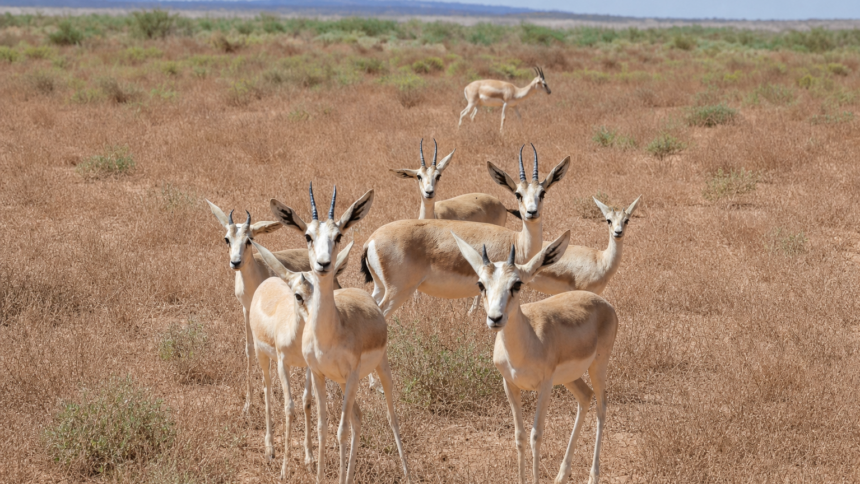
The Prince Mohammed bin Salman Royal Reserve described the ReWildingVoltaics initiative as delivering a double-green dividend through simultaneous electricity production and biodiversity support at the facility built for Red Sea Global’s AMAALA luxury tourism destination. The 505-hectare site is operated by AMAALA Sustainable Company for Energy, a joint venture involving EDF Group, Masdar, SUEZ and Korea East-West Power. According to the reserve, a seven-month proof-of-concept trial launched in October 2025 that included sand gazelles, mountain gazelles and Arabian hares confirmed the location could sustain wildlife husbandry before the breeding phase began in May with the release of 33 females and five males.
The solar park’s predator-proof perimeter creates a secure controlled environment while shade from the panels lowers ground temperatures by 5 to 10 degrees Celsius, improving conditions for the animals. Reserve assessments found that 73 percent of the area offers suitable habitat combining shaded sections beneath the arrays with open ground featuring rocky outcrops. Andrew Zaloumis, CEO of the Prince Mohammed bin Salman Royal Reserve, told Arab News that the initiative builds on the authority’s work to align renewable energy infrastructure with ecological restoration objectives.
Zaloumis added that the reserve had located no published studies on the husbandry of wild animals inside solar installations and has therefore prepared a short academic paper detailing its research and the rewilding voltaics methodology. First offspring from the founder group are projected to arrive in December under the current breeding timetable. The reserve stated that specialist rangers will continue to monitor health, behavior and reproduction throughout the process.
Population modeling conducted by the reserve’s Scientific Services Division indicates the herd could expand to around 600 animals by 2031. A minimum founder population of 500 is viewed as necessary before any reintroduction into the wider 24,500-square-kilometer protected landscape can proceed, the authority said. Sand gazelles were chosen for the program on the basis of their ecological importance and compatibility with the solar park setting.
The International Union for Conservation of Nature classifies the sand gazelle as vulnerable, a designation linked to long-term declines from overhunting and habitat degradation across the Arabian Peninsula, according to regional conservation assessments. Saudi Arabia maintains multiple reintroduction programs for native species, including earlier releases of hundreds of sand gazelles into areas such as Uruq Bani Ma’arid during the 1990s that a ScienceDirect-published study on threatened gazelles credited with supporting population recovery. The Prince Mohammed bin Salman Royal Reserve has itself reintroduced 14 of 23 historically native species to its varied ecosystems ranging from volcanic fields to Red Sea coastlines.
This solar-based breeding effort has increased the reserve’s wildlife husbandry capacity fifteenfold compared with previous facilities while permitting continuous specialist oversight of the animals. The project forms part of Saudi Arabia’s broader push to expand renewable energy under Vision 2030 alongside enhanced environmental safeguards across its royal reserves. Data gathered from the site is expected to inform potential replication of the dual-use model at other locations in the kingdom.