
 ع
ع


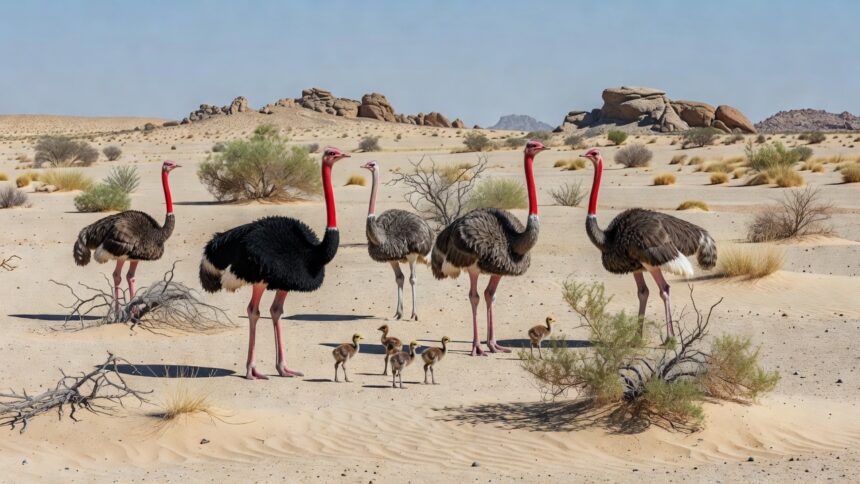
The Imam Turki bin Abdullah Royal Nature Reserve Development Authority stated that the seven chicks hatched during the second quarter of 2026 demonstrate the species’ ability to adapt and reproduce naturally in the protected environment. This development indicates the ostriches have progressed beyond initial release and adjustment stages to form self-sustaining populations capable of completing their life cycle in the wild. The authority highlighted that the successful breeding reflects the suitability of the reserve’s habitats along with the effectiveness of its protection measures and ongoing field monitoring.
According to the National Center for Wildlife, the red-necked ostrich once ranged across the Arabian Peninsula but vanished from Saudi Arabia due to overhunting roughly a century ago. The center operates captive breeding programs at the Prince Saud Al-Faisal Center for Wildlife Research in Taif, where red-necked ostriches are among six key vertebrate species targeted for propagation and release into historic ranges. These programs supply animals for reintroduction initiatives across multiple reserves in the kingdom.
The authority explained that its reintroduction process begins with habitat studies, preparation and protection before selecting release sites and conducting continuous tracking of animal movements, adaptation, reproduction and distribution. The births form part of broader national efforts to restore wildlife diversity by returning extinct species to their former ranges and supporting ecosystem stability. The Imam Turki bin Abdullah Royal Nature Reserve covers a substantial territory in northern Saudi Arabia and participates in plans to reestablish 23 historically native species.
Updates from the National Center for Wildlife indicate that five red-necked ostriches were released into the reserve in late 2025 as a founder population for the current breeding success. Monitoring data from the center show that earlier reintroduction projects in areas such as Mahazat as-Sayd have resulted in populations estimated between 125 and 150 birds following initial releases of nearly 100 ostriches over past decades. The latest chicks hatched entirely in the wild provide measurable evidence of program viability.
The National Center for Wildlife has documented that its terrestrial conservation work includes developing protocols for breeding and reintroduction while conducting applied research on captive animals to improve outcomes. Collaboration between the center and the reserve development authority ensures scientific standards guide each step of the ostrich program. Field teams continue to gather data on chick survival and population growth to refine future releases across Saudi protected areas.