
 ع
ع


The National Center for the Prevention and Control of Plant Pests and Animal Diseases, known as the Weqaa Center, announced that the World Organisation for Animal Health has officially certified the Kingdom free from dourine. This recognition took effect on August 27, 2026, after WOAH completed its evaluation of the center’s comprehensive technical file demonstrating full compliance with international standards. Weqaa Center data confirmed that sustained surveillance, epidemiological surveys and preventive measures had produced no evidence of the disease in the national equine population for the required period.
Dourine is a chronic, often fatal venereal disease of equids caused by the protozoan Trypanosoma equiperdum that spreads primarily through breeding, according to WOAH terrestrial animal health code documentation. The organization’s criteria for a dourine-free country include a stamping-out policy where cases arise, absence of clinical signs for at least two years and annual negative diagnostic testing of breeding horses over a two-year cycle. A Weqaa Center assessment found that Saudi Arabia’s programs satisfied every listed requirement through consistent field monitoring and laboratory verification.
This certification extends a series of WOAH recognitions secured by the Kingdom for equine diseases, with glanders declared absent in 2025 and equine viral arteritis granted freedom status earlier in 2026, Weqaa Center records show. The center prepared each self-declaration in accordance with the relevant chapters of the WOAH code, submitting detailed evidence of notifiability, historical absence and ongoing risk mitigation. Such sequential achievements have progressively strengthened the credibility of Saudi veterinary health certificates for cross-border movements.
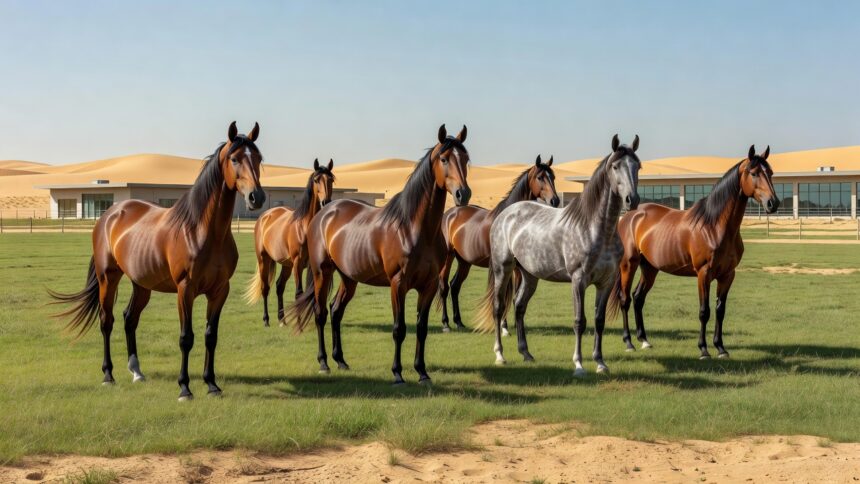
The Weqaa Center reported that the dourine-free status will simplify health requirements for horse imports, exports and participation in international competitions by minimizing additional testing obligations. Saudi Arabia has developed a significant equestrian sector centered on racing and breeding, where official disease freedom directly supports operational continuity and investor confidence. WOAH listings of certified countries indicate that similar statuses have enabled expanded trade flows in equines across compliant member states.
Weqaa Center surveillance protocols continue to mandate annual testing of at-risk breeding stock and immediate reporting of any suspect cases nationwide, the center’s published guidelines state. Collaboration with WOAH reference laboratories ensures that diagnostic methods remain aligned with the latest validated techniques. The center’s animal health sector has applied the same structured approach across its multiple disease-free declarations to maintain uninterrupted compliance.
Official publication of the self-declaration on the WOAH platform followed standard procedural review, confirming the Kingdom’s standing among countries with robust equine health oversight. Weqaa Center figures place the cumulative effect of these recognitions as enhancing both domestic livestock protection and the Kingdom’s role in regional animal health cooperation. The latest confirmation completes another milestone in the center’s ongoing monitoring of transboundary equine diseases.