ع



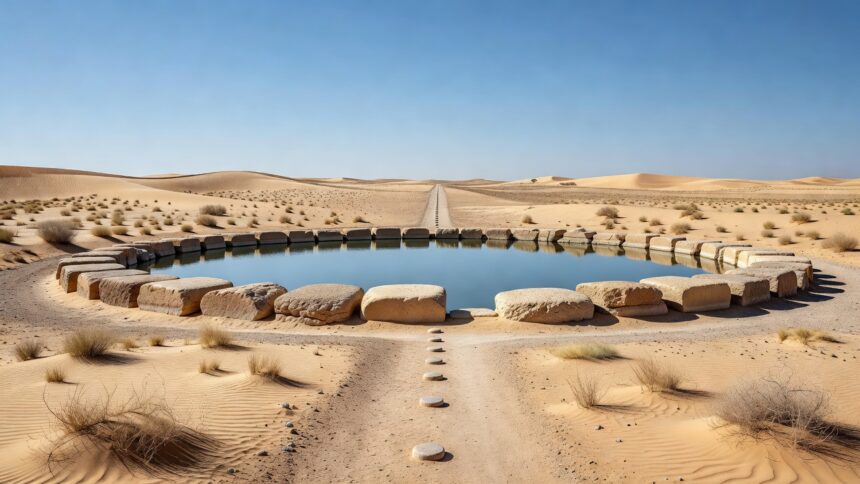
The UNESCO World Heritage Centre describes the Darb Zubaydah as the most significant Hajj route during the Abbasid Caliphate from 750 to 850 CE, a period recognized as the golden age of Muslim civilization. Historical records from geographers including Ibn Khordadbah and Al-Maqdisi detail how the trail was equipped with milestones, fire beacons and rest houses spaced at daily travel intervals for camel caravans. Zubaydah bint Ja’far, wife of Caliph Harun al-Rashid, initiated large-scale improvements after observing pilgrim hardships during her own journey in 792 CE, according to accounts compiled by historian Ibn Khallikan.
A study published by Saudi archaeologist Sa’d Abdul Aziz Al-Rashid documented more than 1,300 wells and over 100 stone-lined reservoirs along the route, many designed to capture seasonal runoff from wadis. The infrastructure supported not only religious pilgrims but also merchants and official messengers, helping maintain Abbasid administrative control across the empire, a 2024 heritage assessment by researcher Richard Wilding concluded. Political tensions in the 10th century between Iraq and the Hijaz led to the route’s gradual decline, with the final organized caravan recorded in 1243 CE during the reign of Caliph Al-Musta’sim.
Archaeological surveys conducted by the Saudi Heritage Commission have identified remains of palaces, mosques and dams at stations such as Zubala, Faid and Al-Rabadhah, confirming descriptions found in medieval texts. These excavations revealed circular stone markers placed every two kilometers to guide travelers, aligning with the barid measurement system used for both distance and postal relays. The commission’s work has also traced secondary paths branching from the main Darb Zubaydah toward Madinah and Basra.
Ibn Battuta stated that every reservoir, pool or well on the road from Mecca to Baghdad owed its existence to Zubaydah’s generosity and that without her concern the route would not have been usable by anyone. The Abbasid princess allocated more than two million dinars for water projects in Makkah, including an aqueduct from the Hunayn spring that reached Arafat, according to multiple classical sources. Her patronage extended to paving sections of the trail and clearing obstacles, transforming a pre-Islamic trade path into a structured pilgrimage corridor.
Recent preservation initiatives announced in early 2026 have targeted sites like the Al-Araish pools and Zubala station, where teams continue to map Abbasid-era water systems. The Saudi Heritage Commission has coordinated with regional partners to document the Iraqi and Saudi segments of the 1,277-kilometer trail as part of a broader UNESCO nomination for the Hajj pilgrimage routes. These efforts build on earlier fieldwork that located 27 primary stations and an equal number of substations originally constructed under caliphs including Al-Mahdi and Al-Muqtadir.
The route’s layout emphasized straight alignments where terrain permitted, with palaces at major oases serving both practical and symbolic roles in projecting caliphal authority, according to analysis in the UNESCO tentative list file. Geographer Al-Yaqubi and traveler Ibn Jubair provided some of the earliest detailed itineraries that modern surveys have largely validated. Ongoing research continues to recover artifacts that illustrate the daily realities of medieval pilgrims and traders who relied on the Darb Zubaydah.