ع



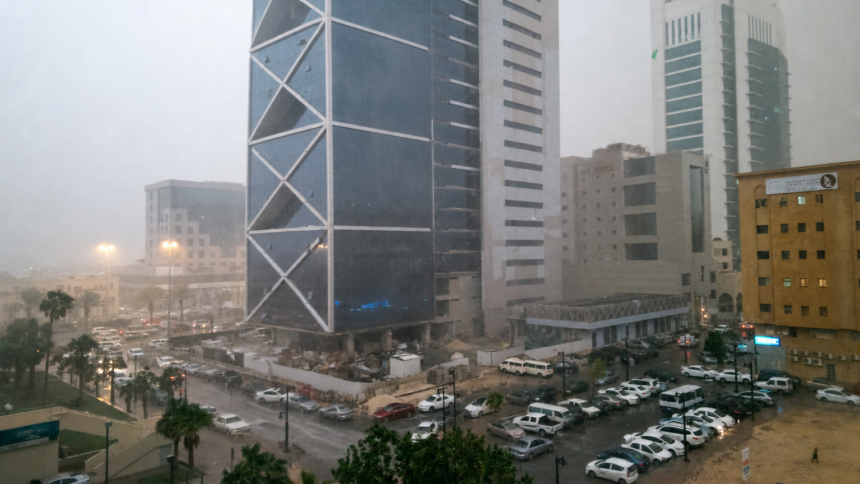
The National Center for Meteorology released its semi-quarterly climate outlook on October 4 detailing prospects for the final quarter of 2026. Forecasts indicate above-average rainfall across most of the Kingdom during October with probabilities reaching 80 percent in many areas and continuing at elevated levels through November at around 75 percent likelihood. December is expected to bring near-average precipitation to the majority of regions according to the center’s assessment.
October rains are projected to range from moderate to heavy with potential for very heavy to extremely heavy falls in multiple provinces the National Center for Meteorology reported. Affected areas include Tabuk Madinah Al-Baha Asir Al-Jawf Hail Qassim the Northern Borders and most of Riyadh plus western Najran where very heavy rainfall is anticipated. Makkah Jazan and the Eastern Province except its southern sector could experience the most intense downpours the center stated.
November is set to maintain the wetter pattern across much of Saudi Arabia the National Center for Meteorology forecast with heavy to very heavy rainfall likely in Makkah Riyadh Al-Baha Asir Jazan Al-Jawf the Northern Borders Tabuk and the Eastern Province. Additional zones include most of Qassim except its western parts Hail except the southwest and both northern and southern sections of Madinah. The center noted these conditions coincide with broader autumn patterns that have shown increasing variability in recent years.
Surface temperatures are expected to average 1 to 3 degrees Celsius above normal throughout October November and December the National Center for Meteorology data shows. This warming trend applies nationwide and accompanies the elevated rainfall probabilities outlined in the report. Such combined conditions have implications for water management and emergency planning the center indicated in its announcement.
The National Center for Meteorology issues these outlooks to assist government entities and residents in preparing for seasonal weather the organization said in its October 4 statement. Historical records maintained by the center reveal that Saudi Arabia typically receives limited annual rainfall with wide regional variations that make above-average events particularly noteworthy. Comparable forecasts in prior years have supported coordination among civil defense and municipal authorities to address potential flooding risks.
Regional benchmarks from the center’s long-term observations place average October rainfall below 20 millimeters in many interior areas yet the current projection suggests substantial exceedance of those baselines. The forecast covers both Red Sea and Arabian Gulf coastal zones where probabilities for increased precipitation are similarly high. Authorities have been urged through the report to review drainage systems and public safety measures in advance of the expected wetter period.