
 ع
ع


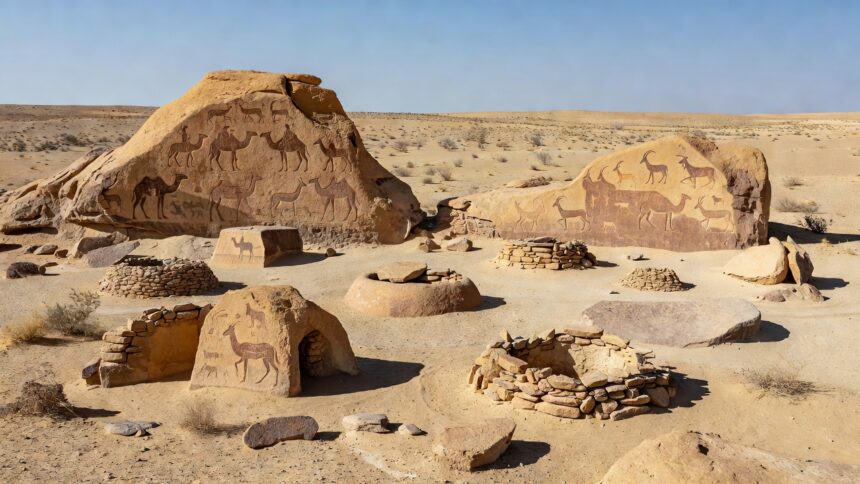
The Heritage Commission has documented more than 100 archaeological sites in the Al-Dawadmi governorate of Riyadh region as part of the first season of its High Najd Project, the commission reported. Among the finds were inscriptions and stone structures that indicate a long history of human settlement in the area, according to the commission. These discoveries offer fresh perspectives on the lives of ancient communities that inhabited the central Arabian landscape centuries ago.
The commission’s tally from the survey listed 187 animal depictions, 36 human figures, 31 Thamudic and early Islamic inscriptions as well as 36 symbols and tribal marks known as wusum etched into rock faces. The figures reflect both the abundant wildlife of the period and the artistic techniques employed by early humans, including the application of colored pigments, a commission assessment found. Such rock art provides evidence of hunting practices and environmental conditions that prevailed in the region at the time.
In parallel, project teams recorded multiple types of stone structures, among them circles, circular cairn tombs and various cairns, the Heritage Commission detailed in its update. These constructions further demonstrate the archaeological richness of Al-Dawadmi and point to ceremonial or burial practices from antiquity. The combination of portable art and fixed monuments underscores the layered history embedded in the High Najd terrain.
As an initiative of the Heritage Commission, the High Najd Project contributes to systematic efforts to survey, document and conserve the kingdom’s archaeological resources, the body stated. The commission, operating under the Ministry of Culture, has prioritized comprehensive mapping of sites across diverse regions to expand scholarly knowledge of Saudi Arabia’s prehistory. Data from similar projects have previously helped integrate new locations into the national heritage inventory maintained by the authorities.
Thamudic inscriptions discovered in the survey belong to an ancient script used across the Arabian Peninsula before the rise of Islam, according to linguistic studies published by the Saudi Historical Society. The 31 examples identified in Al-Dawadmi add to a corpus that aids researchers in reconstructing social and economic patterns of nomadic groups. Human figures and animal representations, totaling 223 in all, form a significant addition to known rock art concentrations in the Riyadh province.
The findings come as Saudi Arabia continues to develop its cultural sector, with the number of documented archaeological locations nationwide exceeding several thousand according to Ministry of Culture statistics. Al-Dawadmi’s location in the Najd highlands has long been recognized for its potential to yield insights into ancient migration routes and settlement strategies. Ongoing analysis of the collected data is set to produce detailed reports that will inform both academic research and public education programs on national heritage.