
 ع



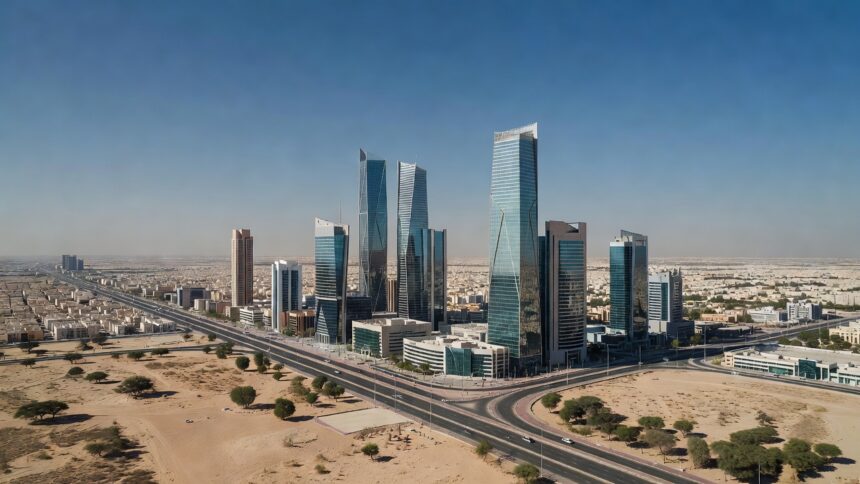
The General Authority for Statistics revised its preliminary flash estimate to show non-oil activities advancing 0.9 percent in the April-to-June period compared with the same quarter a year earlier. Government activities recorded identical growth of 0.9 percent while oil activities contracted 24.8 percent, more than accounting for the overall 4.7 percent GDP decline. The authority’s assessment found that non-oil activities contributed positively to the headline figure even as oil output fell.
This performance builds on the structural shift detailed in the Saudi Vision 2030 Annual Report, which placed non-oil GDP at 55 percent of the total economy in 2025 following 4.9 percent growth that year. The report also noted the private sector’s contribution rising to 51 percent. Such trends align with the long-term objective of reducing dependence on hydrocarbon revenues.
On a seasonally adjusted basis, real GDP decreased 4.8 percent from the first quarter, according to the same GASTAT data set. Oil activities dropped 21.6 percent on that measure while non-oil activities slipped 0.4 percent and government activities gained 0.2 percent. The quarterly movement illustrates the continued influence of OPEC+ production decisions on headline growth.
The International Monetary Fund has projected non-oil growth of 2.6 percent for the full year of 2026, suggesting an expected pickup in the second half. Recent high-frequency indicators have pointed to stabilization in non-oil activity following any earlier disruptions. Purchasing managers’ index readings for August showed the non-oil private sector expanding at its fastest pace in six months.
Labor market outcomes have also improved, with the unemployment rate falling to 6.4 percent in the first quarter of 2026. This decline from 7.2 percent in the prior period reflects broader gains in employment across non-oil sectors. Government spending rose 11 percent year-on-year in the second quarter, supporting activity in public services and infrastructure.
Fiscal revenue increased 12.3 percent in the period, aided by a 2.5 percent rise in non-oil revenue, according to budget execution data. These figures demonstrate the growing role of non-hydrocarbon income streams. The Public Investment Fund has further boosted its contribution to non-oil GDP, adding nearly $100 billion in impact last year.