
 ع
ع


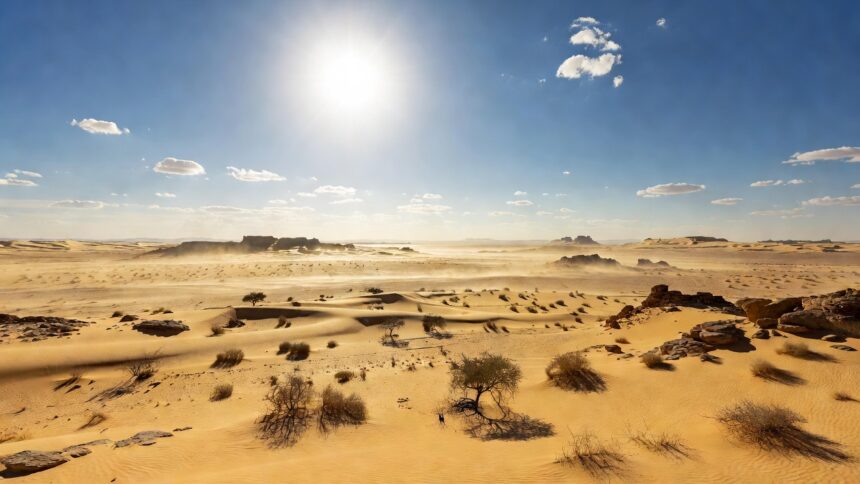
The National Center for Meteorology forecast continued extreme heat across the Eastern Province and parts of the Riyadh, Madinah and Makkah regions on August 5 with daytime temperatures reaching 46 degrees Celsius in both Madinah and Buraidah while Riyadh hit 45 degrees Celsius and Dammam registered 45 degrees Celsius. Makkah saw a high of 44 degrees Celsius and Jeddah 40 degrees Celsius according to the center’s readings with Tabuk and Najran both at 41 degrees Celsius. The NCM data placed highs at 44 degrees Celsius in Arar and Sakaka 42 degrees Celsius in Hail 38 degrees Celsius in Jazan 33 degrees Celsius in Abha and 32 degrees Celsius in Al-Baha as the hot conditions persisted into the week.
Active winds stirred dust and reduced visibility in multiple areas the National Center for Meteorology said with dust-raising conditions affecting the Eastern Province Northern Borders Hail Al-Qassim Makkah and Najran regions. The center noted that suspended dust impacted Jeddah Jazan Riyadh Buraidah Arar and Sakaka while strong winds swept through Riyadh Jazan Asir Makkah Najran the Northern Borders Hail Al-Qassim and Tabuk. Such patterns have become more frequent in recent summers the NCM assessment found as atmospheric conditions align with seasonal heat trends.
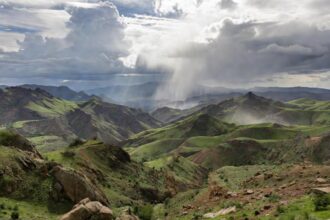
Thunderstorms accompanied by rainfall continued over the southwestern highlands the National Center for Meteorology reported with activity concentrated in Abha and Al-Baha where clouds brought the possibility of scattered precipitation. Madinah was forecast to be partly cloudy to cloudy while Makkah Hail Dammam and Najran were expected to see partly cloudy skies according to the center’s bulletin. The NCM highlighted that these convective developments often occur in the elevated terrain during this time of year when moisture interacts with rising temperatures.
An NCM seasonal outlook released in late July projected warmer-than-normal conditions across most of Saudi Arabia from August through October with a 60 to 80 percent probability of above-normal surface temperatures and potential increases of up to 2 degrees Celsius above the climatic average in some areas. The center indicated that rainfall was likely to become more widespread toward the end of the three-month period as the season progresses. This forecast aligns with the current observations of sustained heat and isolated thunderstorm activity the NCM data shows.
A World Meteorological Organization report from late 2025 found that temperatures in the Arab region are rising at twice the global average with 2024 recorded as the hottest year on record for the area. The assessment noted an 83 percent increase in extreme weather disasters between 1980-1999 and 2000-2019 including heat waves and flash floods that affected nearly 3.8 million people and caused more than 300 deaths across the region. Saudi Arabia has participated in related capacity-building efforts with the World Meteorological Organization and ESCWA to improve dust and sand storm forecasting the organizations stated in workshop summaries from 2025.
Historical temperature records compiled by regional monitoring services show that Saudi locations have previously reached extremes above 50 degrees Celsius in summer months with Al-Ahsa recording 51 degrees Celsius in 2024 and other inland sites frequently exceeding 48 degrees Celsius. The National Center for Meteorology has issued repeated updates this summer warning of the compounding effects of heat and dust on visibility and public health. Such bulletins form part of the center’s routine monitoring that draws on ground stations and satellite data to track evolving weather systems across the kingdom.