ع



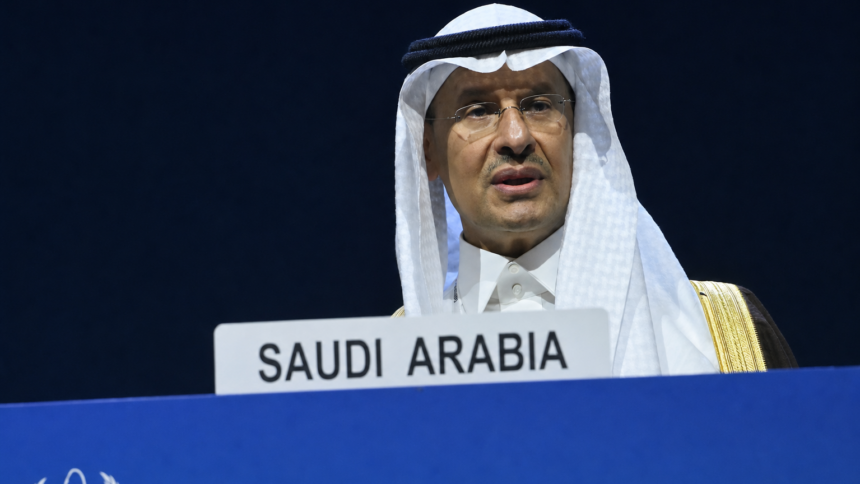
Prince Abdulaziz bin Salman provided the update while addressing the Made in GCC 2026 Forum and Exhibition in Manama, where he outlined current operations on the cross-country pipeline that links eastern production areas to western export facilities. The minister’s statement confirms that the kingdom has rebuilt pressure and throughput following a mid-September shutdown triggered by drone strikes on pumping stations. Saudi officials had previously attributed those attacks to Iraqi militias operating amid broader regional conflicts that closed the Strait of Hormuz to tanker traffic.
A Bloomberg assessment placed initial restored flows at 3.5 million barrels per day by the end of September after Aramco completed repairs and resumed loadings at Yanbu. The East-West Pipeline, which holds a total capacity of 7 million barrels per day according to multiple industry analyses, had been moving roughly 4 million barrels per day before the attacks, an amount equivalent to about 4 percent of global supply. Reuters data show that the line assumed this heightened strategic role once Hormuz traffic became untenable, allowing continued exports from Red Sea terminals.
Shipping trackers indicated that several large tankers began loading crude at Yanbu and other western ports within days of the restart, with volumes climbing steadily through the final week of September. The pipeline’s resumption has enabled Saudi Arabia to sustain elevated export levels even as Persian Gulf routes face intermittent threats. Industry observers noted that roughly 2 million barrels per day typically supply western refineries, leaving the balance available for international sales.
Prince Abdulaziz bin Salman has overseen rapid recovery efforts across affected energy sites, including the Manifa field where output was restored after an earlier reduction of 300,000 barrels per day. Earlier ministry assessments following the September incidents had estimated a 700,000 barrel-per-day drop in pipeline throughput that officials moved quickly to reverse. The latest figure of 5.8 million barrels per day demonstrates progress toward pre-attack operational levels that had already exceeded historical averages for the 1,200-kilometer system.
The East-West Pipeline, constructed in the 1980s to diversify export pathways, has repeatedly proven its value during periods of strait closure according to energy ministry records. Current operations reflect coordination between Saudi Aramco and the energy ministry to balance domestic refining needs with global market commitments. Additional tankers loading at Red Sea facilities in recent days further illustrate the infrastructure’s return to supporting both local processing and international deliveries.