
 ع
ع


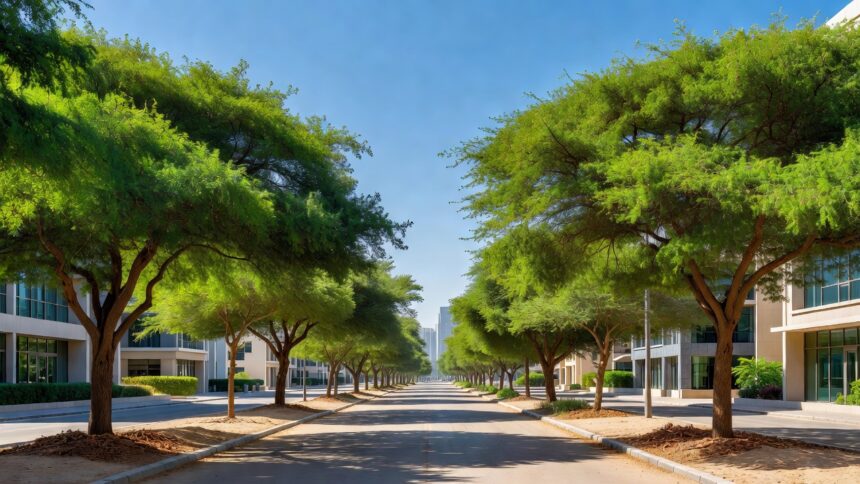
The Ministry of Environment, Water and Agriculture described tree planting as one of the most effective natural solutions for lowering high summer temperatures, with individual trees providing shade that prevents roads and buildings from absorbing and radiating heat. According to the ministry, transpiration allows trees to release water vapor that cools surrounding air, creating measurable reductions in urban heat levels. A single mature tree absorbs an average of 150 kilograms of carbon dioxide per year, the ministry figures show, contributing directly to improved air quality across populated areas.
Expanding green spaces generates multiple public health gains, a ministry assessment found, ranging from lowered stress and enhanced mental well-being to the filtration of airborne pollutants. The authority added that increased vegetation reduces noise pollution, assists with rainwater absorption to prevent flooding and supplies habitats for wildlife together with natural pollinators. Community participation combined with responsible maintenance practices will determine the long-term success of these greening programs, the ministry stated.
The ministry recommended prioritizing native tree species that have adapted to Saudi climatic conditions and therefore require less water to survive. It advised residents to irrigate new plantings during early morning or late evening hours when evaporation rates are lowest. Drip irrigation systems can reduce water loss by up to 50 percent compared with traditional methods, the ministry data indicate, while layers of organic mulch help retain soil moisture around root zones.
These guidelines represent a long-term investment in environmental resilience that extends beyond immediate heat relief, according to the Ministry of Environment, Water and Agriculture. Proper implementation by individuals, organizations and local authorities remains necessary to scale vegetation cover effectively across different regions. The approach builds on existing lists of suitable native plants published by the ministry for gardens, streets and public spaces.
The ministry’s statements align with the Saudi Green Initiative, whose published roadmap calls for planting 10 billion trees nationwide to address desertification, reduce carbon emissions and enhance air quality. An assessment published on the SGI website projects that increased urban tree canopy will lower city-center temperatures by at least 2.2 degrees Celsius while cutting carbon dioxide levels. The two-year feasibility study underpinning the roadmap was conducted by the Ministry of Environment, Water and Agriculture in cooperation with the National Center for Vegetation Cover Development and Combating Desertification, incorporating more than 1,150 field surveys and input from local and international experts.
More than 41 million trees were planted in Saudi Arabia between 2017 and 2023, SGI figures show, providing an initial base for the larger target. The initiative’s first phase from 2024 to 2030 focuses on nature-based solutions to establish 600 million trees across 3.8 million hectares. This domestic effort forms one component of the broader Middle East Green Initiative, which according to UNEP reporting seeks to plant an additional 40 billion trees across the region to restore degraded land and mitigate climate impacts.