ع



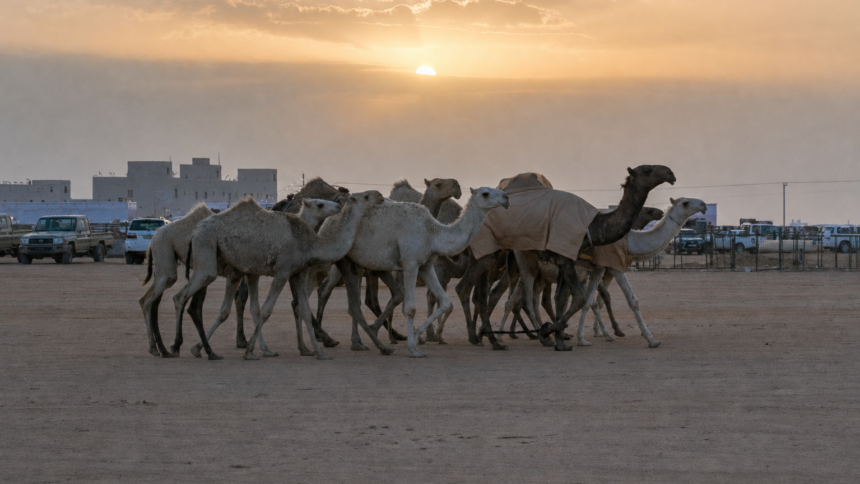
The Ministry of Environment, Water and Agriculture issued decision 481533452 on August 8 adopting the Manual of Regulatory Controls for Trading in Camels, which took effect upon its publication in the Umm Al-Qura official gazette. The framework draws on the Agriculture Law and the GCC Animal Welfare Law along with their executive regulations and existing ministry procedures for electronic camel registration. It defines essential terms including camel owner, ownership certificate, electronic chip identification, veterinary health certificate from the Nama platform, sales contract, seasonal markets, auctions, leasing and bartering while assigning a central role to approved digital platforms for data management and ownership transfers.
All camel sales contracts must now establish mutual consent, specify the animals by breed, sex, name, weight, age, health status, color and other identifiers, and confirm that the camels are present and known to both parties at the time of agreement, according to the ministry’s manual. Sellers are required to complete ownership transfer procedures, deliver the animals in the agreed condition, disclose any health issues or third-party rights, and guarantee freedom from diseases or hidden defects. Buyers bear responsibility for full payment, receipt of the camels, and subsequent compliance with veterinary care, examinations, vaccinations, transportation and registration requirements.
The regulations introduce structured rules for camel leasing and bartering that rely exclusively on electronic contracts registered through the ministry’s approved platform, the published controls stated. Such agreements grant the lessee a temporary independent record for the duration of the contract, after which ownership automatically reverts to the original owner without further action. Both parties must maintain health, biosecurity and vaccination standards throughout the lease period, with any supported camels subject to full disclosure of government assistance to avoid penalties.
Auctions and seasonal markets face tightened oversight under the new rules, which ban all cash transactions in favor of mandatory electronic payments and require comprehensive recording of seller and buyer identities, camel details, prices and transport license numbers. Temporary auctions held outside public benefit markets must follow ministry-issued conditions, complete official ownership transfers, and bar the display or sale of any camels showing signs of stress, illness or incomplete vaccination programs. Organizers are further obligated to isolate affected animals and destroy any materials deemed unfit for consumption through formal reporting channels.
Animal welfare provisions form a core component of the regulatory manual, prohibiting harassment, loud noises, deliberate disturbance or any actions that could agitate camels at markets, exhibitions or auctions. Display areas must remain clean with adequate spacing maintained around each animal, and the rules explicitly forbid raising voices or causing stress during handling. The ministry has established channels for reporting cases of abuse or cruelty, triggering systematic enforcement measures under the relevant animal welfare statutes.
Failure to disclose government support on leased or traded camels triggers immediate suspension of subsidies, retroactive recovery of funds and prohibitions on relocating or transferring the animals without explicit ministry approval, the decision emphasized. Transporting camels without prior authorization constitutes a violation of the Agriculture Law and its implementing regulations, exposing parties to fines. The controls apply uniformly to individuals and entities engaged in camel trading, aiming to replace previous informal practices with traceable electronic processes that safeguard livestock health and stakeholder rights.
The ministry’s framework integrates existing tools such as electronic chips, camel passports and Nama platform health cards into every transaction, ensuring continuity from the August decision through its September publication. This builds on prior procedural guides for camel management while extending oversight to previously unregulated areas such as leasing and bartering. All concerned parties are expected to align operations with the manual following its release in the official gazette.