ع



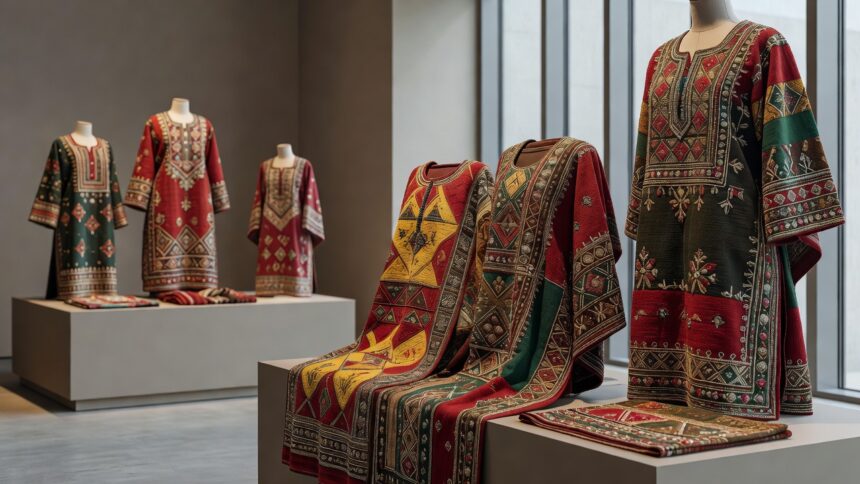
The Heritage Bride presentation formed part of Saudi Arabia’s broader programming at Expo 2025 Osaka, where traditional Asir garments and narratives illustrated the role of women in preserving regional customs amid national development. According to the Ministry of Culture, the displays blended historical accounts with contemporary interpretations to foster cross-cultural dialogue during the 70th anniversary of Saudi-Japanese diplomatic relations. Arab News coverage of the pavilion noted that such features helped convey the depth of Saudi heritage beyond standard tourism imagery, with live demonstrations drawing consistent crowds from June through September 2025.
Artisans from Asir demonstrated embroidery and weaving techniques that have been maintained primarily by female practitioners across successive generations in the province’s mountain communities. The Royal Institute of Traditional Arts, which participated in the Osaka week, reported that student enrollment in heritage programs rose 40 percent in the preceding five years as Vision 2030 expanded opportunities for women in creative sectors. Exhibitions included photographic elements that captured both historic and modern expressions of these skills, allowing Japanese attendees to interact with the materials directly.
Saudi cultural officials integrated the Heritage Bride motif into multiple activations, including workshops where participants learned about the symbolic significance of Asir bridal attire in family and community contexts. A related photography series commissioned for the event, as detailed in Vogue Arabia reporting from September 2025, emphasized women’s leadership in arts and entrepreneurship as key drivers of the Kingdom’s progress. The Ministry of Culture coordinated these sessions alongside Japanese counterparts to highlight shared values of craftsmanship and storytelling.
Data from the Saudi Press Agency placed total engagement with Saudi cultural programming in Japan at over 959 million media impressions during the expo period, reflecting strong interest in the handicrafts focus designated for 2025. Asir-specific elements stood out for their distinctive geometric patterns and natural dyes, which organizers paired with Japanese textile methods in collaborative demonstrations. The approach aligned with efforts by the Heritage Commission to document and promote regional variations that might otherwise remain localized.
Follow-up tours after the main expo dates extended the reach to additional Japanese cities, where the same narratives were adapted for smaller audiences through digital and physical formats. Public Authority for Culture figures indicate that female participation in Saudi creative industries has grown steadily since 2018, providing a foundation for projects like the Heritage Bride that position women as primary custodians of oral and material history. These extensions built on the initial Osaka success by incorporating feedback from local visitors who expressed appreciation for the personal dimension of the stories.
The initiative reflects Saudi Arabia’s increasing emphasis on cultural diplomacy, with similar programming appearing at other international venues in recent years. According to institute assessments, the combination of live interaction and historical context proved particularly effective in building lasting connections between Saudi and Japanese participants. Plans for continued collaboration into 2027 were referenced in closing statements from the Ministry of Culture following the expo’s conclusion.