
 ع
ع


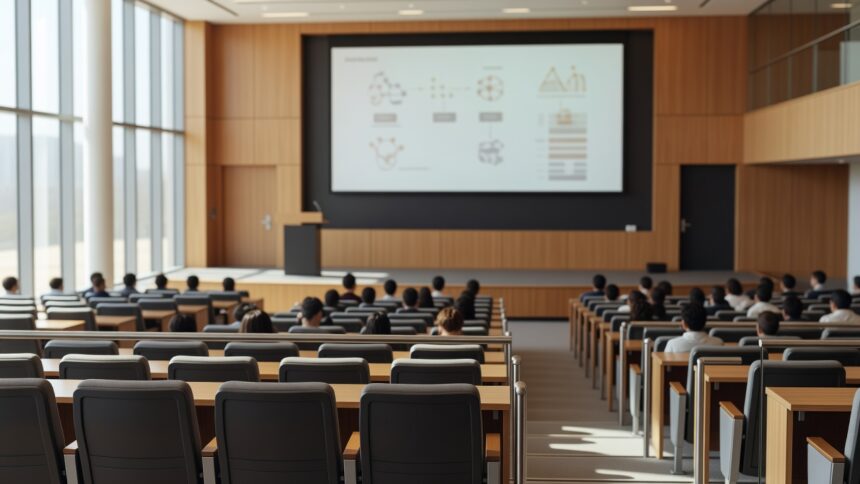
King Abdulaziz City for Science and Technology hosted Saudi Nobel laureate Professor Omar Yaghi for a session with students enrolled in the 2026 Mawhiba Research Enrichment Program on July 24, 2026, the Saudi Press Agency reported. KACST President Dr. Munir bin Mahmoud Al-Desouki joined senior officials at the event, which centered on Yaghi’s pioneering contributions to chemistry and the lessons drawn from his path to international recognition. The gathering formed part of efforts to inspire the next generation of Saudi scientists through direct interaction with leading figures in their fields.
Yaghi received the 2025 Nobel Prize in Chemistry for the development of metal-organic frameworks, according to the Nobel Foundation’s official records. Born in 1965 in Amman, Jordan, the professor maintains affiliations with the University of California, Berkeley, while serving as an advisor to KACST, a role that has deepened his engagement with Saudi research initiatives. His work on reticular chemistry, first introduced in 1995, has enabled advances in areas ranging from clean energy storage to environmental remediation, applications that have drawn global attention since the award announcement.
During his address, Yaghi told the students that every stage of his career represented a new beginning, emphasizing the importance of approaching research with curiosity, continuous learning and a willingness to develop new skills regardless of previous accomplishments. He encouraged young researchers to develop their own scientific paths rather than imitate others, highlighting the value of independent thinking in driving meaningful innovation. Such guidance aligns with broader patterns in Saudi gifted education programs that prioritize creative problem-solving among participants.
The Nobel laureate recounted how many of his early laboratory experiments failed but said perseverance and a commitment to asking new questions ultimately led to important discoveries. Yaghi stressed that scientific progress depends on working in environments that encourage discovery and innovation, collaborating with leading researchers and taking advantage of opportunities that strengthen research capabilities. His remarks came as the Mawhiba program, run by the King Abdulaziz and His Companions Foundation for Giftedness and Creativity, continues to expand access to advanced enrichment activities across Saudi regions.
An open question-and-answer segment followed the presentation, allowing students to probe topics including research methodologies, academic pathways, skill development and sustaining passion for science. Participants in the 2026 cohort represent a select group chosen for their demonstrated potential in STEM disciplines, building on the foundation’s track record of preparing Saudi youth for international competitions. Yaghi’s visit builds upon earlier recognitions, including a KACST ceremony held earlier in 2026 to honor his Nobel achievement.
The Saudi Press Agency noted that the session underscored KACST’s role in fostering connections between established scientists and emerging talent within the kingdom’s growing research ecosystem. Yaghi’s emphasis on collaboration reflects practices that have supported Saudi students in securing awards at global science forums in recent years, as documented in national development reports. Such interactions aim to equip participants with both technical insights and the resilience required for long-term careers in science.