
 ع
ع


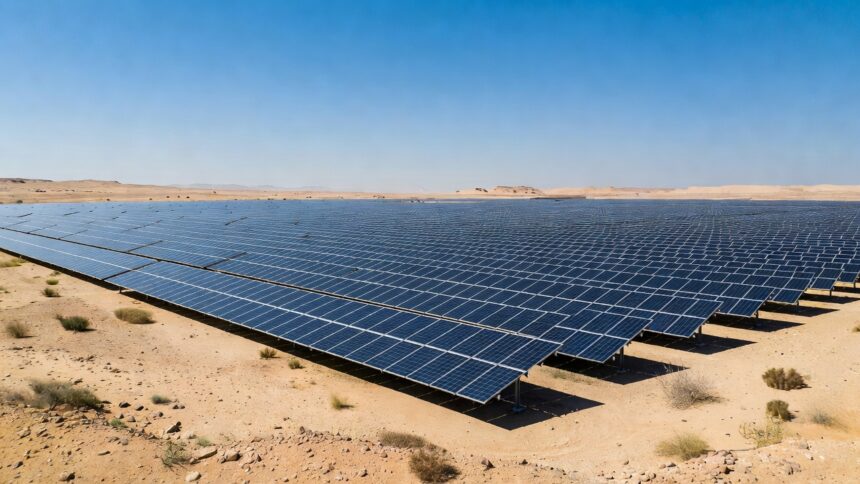
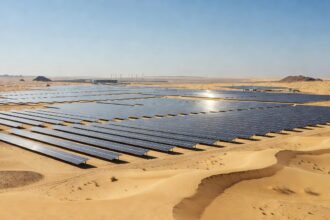
The developer consortium of Masdar, EDF Renewables and Nesma Renewable Energy said the Al Henakiyah 1 solar power plant has entered commercial service with an installed capacity of 1,100 megawatts. Located south of Al Henakiyah Governorate in the Madinah region, the facility will supply the national grid under a long-term power purchase agreement with the Saudi Power Procurement Company. The project was awarded as part of the fourth round of the National Renewable Energy Program overseen by the Ministry of Energy, which has guided competitive procurement of renewable capacity across the kingdom for several years.
Masdar’s November 2023 announcement detailed that the consortium won the bid for the photovoltaic scheme, which reached financial close in 2024 before connecting to the grid the following year in line with the original timetable. The developers noted that the plant occupies an area of around 17 square kilometres and employs solar panels designed to capitalise on the site’s strong irradiance levels. Project documents from the consortium confirm that commercial operations commenced in summer 2025, delivering the first electricity flows into Saudi Arabia’s expanding renewable network.
The power purchase agreement sets the electricity price at 1.68420 US cents per kilowatt-hour, according to details released by the developers. This rate will enable the displacement of liquid fuels previously used for power generation while supporting reductions in overall emissions from the energy sector. The Ministry of Energy has identified such utility-scale solar initiatives as essential building blocks for diversifying the national energy supply and bolstering long-term security.
The plant supports the Kingdom’s goal of increasing the combined contribution of renewable energy and energy storage systems to approximately 50 percent by 2030, a target outlined in successive program updates from the Ministry of Energy. It also aligns with the Liquid Fuel Displacement Program that seeks to minimise oil consumption in electricity production and redirect those resources toward higher economic value. Similar projects already operating in the kingdom have begun to alter the generation mix, according to ministry figures tracking renewable deployment since the program’s early rounds.
Enerdata reporting shows that ACWA Power brought its 600-megawatt Al Shuaibah 1 solar project online in November 2024, adding to the momentum created by earlier schemes such as the 300-megawatt Sakaka plant that Masdar and partners inaugurated in 2021. The Al Henakiyah development forms part of a broader pipeline that includes multiple additional gigawatts of solar and wind capacity either under construction or in advanced tender stages across Saudi Arabia. Central Statistical Bureau data on electricity demand indicate steady annual growth driven by economic expansion, industrial activity and population increases that these new renewable assets are positioned to address.
The consortium stated that the operational plant advances both immediate domestic power requirements and the wider sustainability aims embedded in national development strategies. Subsequent bidding rounds under the National Renewable Energy Program are expected to procure further large-scale capacity in the years ahead. Ministry of Energy officials have consistently underlined that sustained renewable expansion remains integral to achieving the kingdom’s climate commitments and economic diversification objectives.